[Tekst dostępny tylko w języku angielskim] Year: 2026
Medium: TouchDesigner and Collage Materials
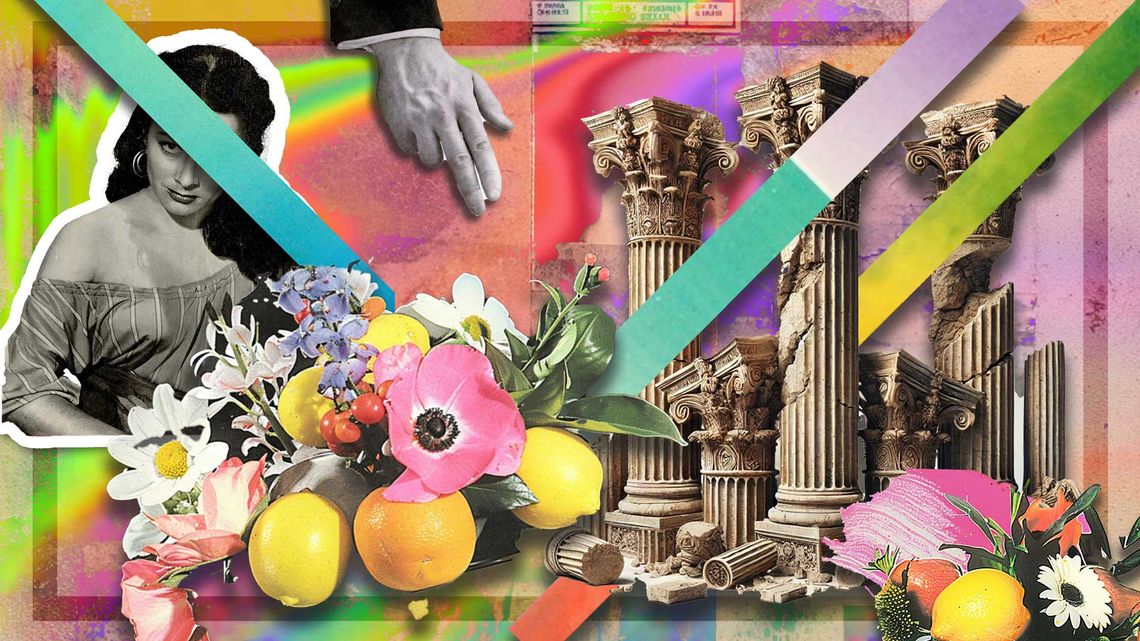
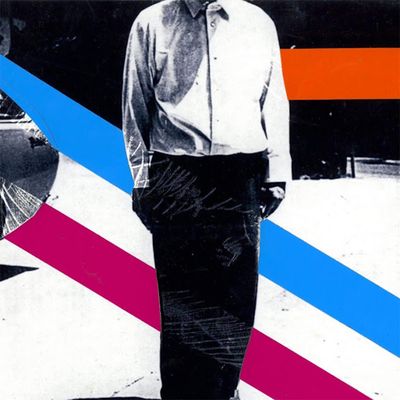
The work is a generative immersive installation developed from an archive of hundreds of collected ephemera fragments. Found in flea markets, on city streets, in personal archives and among recurring motifs from Moncada’s artistic practice, these materials form a continuously evolving visual field that extends across the walls and floor of the immersive space. Some of the physical materials incorporated into the work were collected by the artist in Rome during visits over the years, introducing traces of the city into the installation itself.
Rather than following a predetermined sequence, the fragments continuously fall, accumulate, overlap and dissolve. Their movement is driven by audio analysis, establishing a direct relationship between the musical score and the behaviour of the images. The original music score was composed by NYC producer @vesabeats. The composition appears to breathe with the sound: density, movement and transformation emerge from the interaction between the visual archive and the music.
The same material behaves differently depending on where it appears. Across the walls, fragments accumulate in layers, gradually covering and dissolving into one another. On the floor, they sink, stretch and smear into feedback, as though being absorbed by a different material. The continuous canvas therefore becomes more than a projection surface: it behaves as an environment governed by different physical conditions.
Despite the density and constant movement of imagery throughout the space, the work maintains a sense of calm. Fragments emerge and disappear through slow cycles of accumulation and dissolution, transforming an archive of disconnected objects and memories into a continuously changing composition. Materials gathered at different moments and in different places temporarily coexist before being absorbed back into the system.
The work extends a generative system developed by Moncada following recognition at the 2024 Live Performers Meeting mapping competition in Morocco. A subsequent version of the system was presented later that year in New York City as Mirrored Movement, an immersive installation. For HyperMedia, the process expands across the architecture of the immersive room, allowing accumulated fragments, personal archives and traces collected in Rome to circulate within a single generative environment.